

Virus Induced Organ Damage due to Hyperinflammation
Arboviral infections is caused by a group of viruses spread to people by the bite of infected arthropods (insects) such as mosquitoes and ticks.
Dengue virus is spread by female Aedes aegypti mosquitos in tropic and subtropic areas, but the mosquito is becoming prevalent even in North America and Europe, probably due to the global warming and cross-continent travels. Other viruses spread by the Aedes aegypti mosquitos includes Zika and Chikungunya.
Th majority of infected patients presents with mild or no symptoms – and they will get better in 1–2 weeks. The symptoms usually begin 4–10 days after infection and last for 2–7 days. The symptoms are high fever, severe headache, pain behind eyes, muscle and joint pains, nausea, vomiting, swollen glands, and rash.
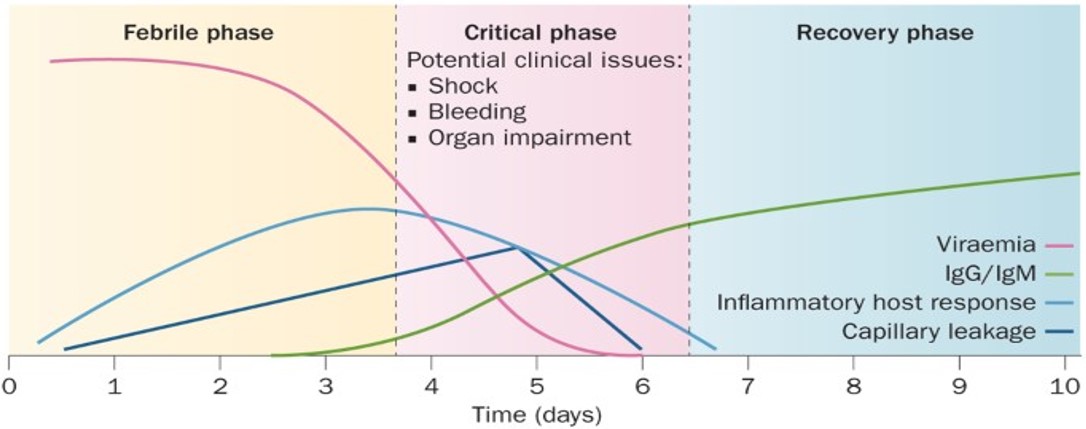
Severe dengue symptoms often come after the fever has gone. The patient experiences severe abdominal pain, persistent vomiting, rapid breathing, bleeding from gums or nose, fatigue, restlessness, blood vomiting or stool, is very thirsty and appears pale and cold skin and is feeling weak. The patient should get hospital care right away. Severe Dengue can in some cases be lethal. Patients infected for the second time are at greater risk of developing severe dengue.
The development of severe symptoms is as for many viral infections associated with a hyperinflammatory response, i.e. response to viral infection that is out of balance, in the most extreme cases called a cytokine storm. As a consequence, key organs may be affected. Such a harmful response of the immune system is e.g. seen in some patients infected with dengue virus where the critical manifestation is shown in the vasculature with bleeding, hypovolemia and hypertension that can lead to circulatory collapse.
According to the World Health Organization (WHO), dengue is now endemic in over 100 countries. As many as 3.6 billion people, or 40% of the world’s population, reside in dengue-endemic areas
Each year:
~400 million people are infected
100 million become ill
21,000 deaths are attributed to dengue
Severe dengue fever can cause internal bleeding and organ damage. The blood pressure can drop to dangerous levels, causing shock – and in some cases, severe dengue fever can lead to death.
The Dengue Fever Patient
Current treatment for Dengue is symptomatic and importantly classical anti-inflammatory drugs as NSAID should be avoided as it would increase the risk of bleeding.
Vaccines are available and can in best case give protection in up to 80% of cases. However, the current vaccines do not protect against all serotypes of dengue virus, are far from available for all people at risk, and finally not all people are willing to get vaccinations
Antiviral compounds against Dengue are in development, but so far the most promising effects of anti-viral treatment are seen if the treatment is given at an early stage of disease where there is a real likelihood to reduce the viral proliferation in the body. With this in mind resomelagon could be added to ongoing anti-viral treatment if and when the symptoms develop in the given patient.
As support for the use of Resomelagon in Dengue Fever:
- In COVID-19 induced hyperinflammation with sign of severe pulmonary affection resomelagon demonstrated a significant treatment potential
- Both COVID-19 and Dengue infection are associated with development of hyper-inflammation due to virus-induced activation of monocytes and macrophages. These cellular targets are a common determinant for these two infective diseases.
- If their activation is not regulated, monocytes and macrophages trigger an uncontrolled inflammatory cascade that leads to a devastating hyper-inflammatory state.
- New data in human monocytes incubated with Dengue virus and in a murine model of severe Dengue support that resomelagon has treatment potential in Dengue
SynAct Pharma is currently running an investigator-initiated proof-of-concept trial in Dengue Fever through the RESOVIR collaboration. The Dengue Alliance was launched in 2022 as a global partnership led by institutions from dengue-endemic countries that aim to develop affordable and accessible treatments for dengue.
Our aspiration is to develop resomelagon as a new treatment option in Dengue Fever
- Faster improvement of symptoms in severe dengue patients
- Attractive Safety Profile – Mild/moderate gastrointestinal adverse (initially)
- Convenient once daily tablet
- Can be given to patients with other disorders (besides dengue fever)
- Can be given together with vaccines and other medicine
- More patients with (severe) Dengue Fever can be treated
- Reduction of mortality rate (potential)
- Reduction of hospital days (potential)